
Feeding koi in spring must be managed carefully to protect fish health and maintain stable water quality. In many cases, early-season pond problems occur because feeding koi in spring begins before metabolism and biological filtration have fully recovered from winter.
Koi are temperature-dependent fish; therefore, their digestion, immune response, and metabolic rate are governed entirely by water temperature. For this reason, spring koi feeding decisions should always be based on measured pond temperature rather than air temperature or visible surface activity. Although fish may appear active, this does not automatically mean their digestive system is fully functioning.
Risks of Early-Season Koi Feeding
When feeding koi in spring at low temperatures, digestive transit time slows significantly; consequently, introducing food too soon increases the risk of instability. In particular, the following issues may develop:
• Incomplete digestion
• Elevated ammonia production
• Nitrite spikes during filter reactivation
• Increased biological oxygen demand
• Greater susceptibility to opportunistic bacterial infections
Meanwhile, nitrifying bacteria responsible for converting ammonia into nitrite and nitrate are also temperature dependent. As water temperatures rise, bacterial efficiency improves; however, during transitional periods, filtration capacity remains reduced. Therefore, controlled feeding during seasonal transition protects both fish and filtration stability.
Water Temperature Guidelines
Clear thresholds should guide feeding levels in early spring. Most importantly, temperature stability is just as critical as the reading itself.
Below 8–10°C
Do not feed. At this stage, metabolic activity is minimal and digestion is inefficient.
10–12°C
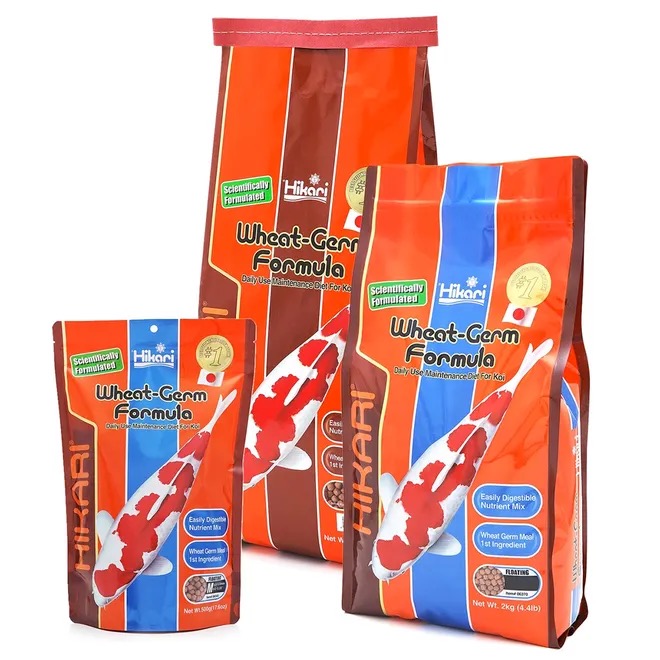
If temperature is stable, introduce very small amounts of highly digestible wheatgerm-based food once every few days. As a result, conservative spring pond feeding reduces ammonia risk.
12–15°C
Gradually increase feeding frequency while keeping portions light and easily digestible. However, avoid sudden increases in ration size during seasonal transition.
Above 15°C
Normal feeding routines can progressively resume as digestion and biological filtration performance improve. Even so, increases should remain controlled rather than abrupt.
Consistency is critical because sudden temperature drops after feeding can increase digestive stress.
Understanding Surface Behaviour
One of the most common mistakes during feeding koi in spring is assuming that surface activity equals hunger. However, increased visibility during seasonal transition is often linked to environmental changes rather than appetite.
For example, longer daylight hours and rising dissolved oxygen levels naturally stimulate movement. Similarly, gradual metabolic activation encourages fish to explore higher water levels. Nevertheless, surface movement does not automatically indicate digestive readiness during early spring feeding periods.
Professional Spring Feeding Strategy
A structured approach to feeding koi in spring should include daily monitoring of water temperature; in addition, water parameters should be tested regularly. Furthermore, food should be reintroduced gradually rather than in large quantities.
Specifically, best practice includes:
• Monitoring ammonia and nitrite levels
• Observing fish behaviour after feeding
• Adjusting feed volume incrementally
• Responding to temperature fluctuations
Ultimately, balanced spring koi feeding supports stable water chemistry, reduces stress on filtration systems, and strengthens long-term koi health.