
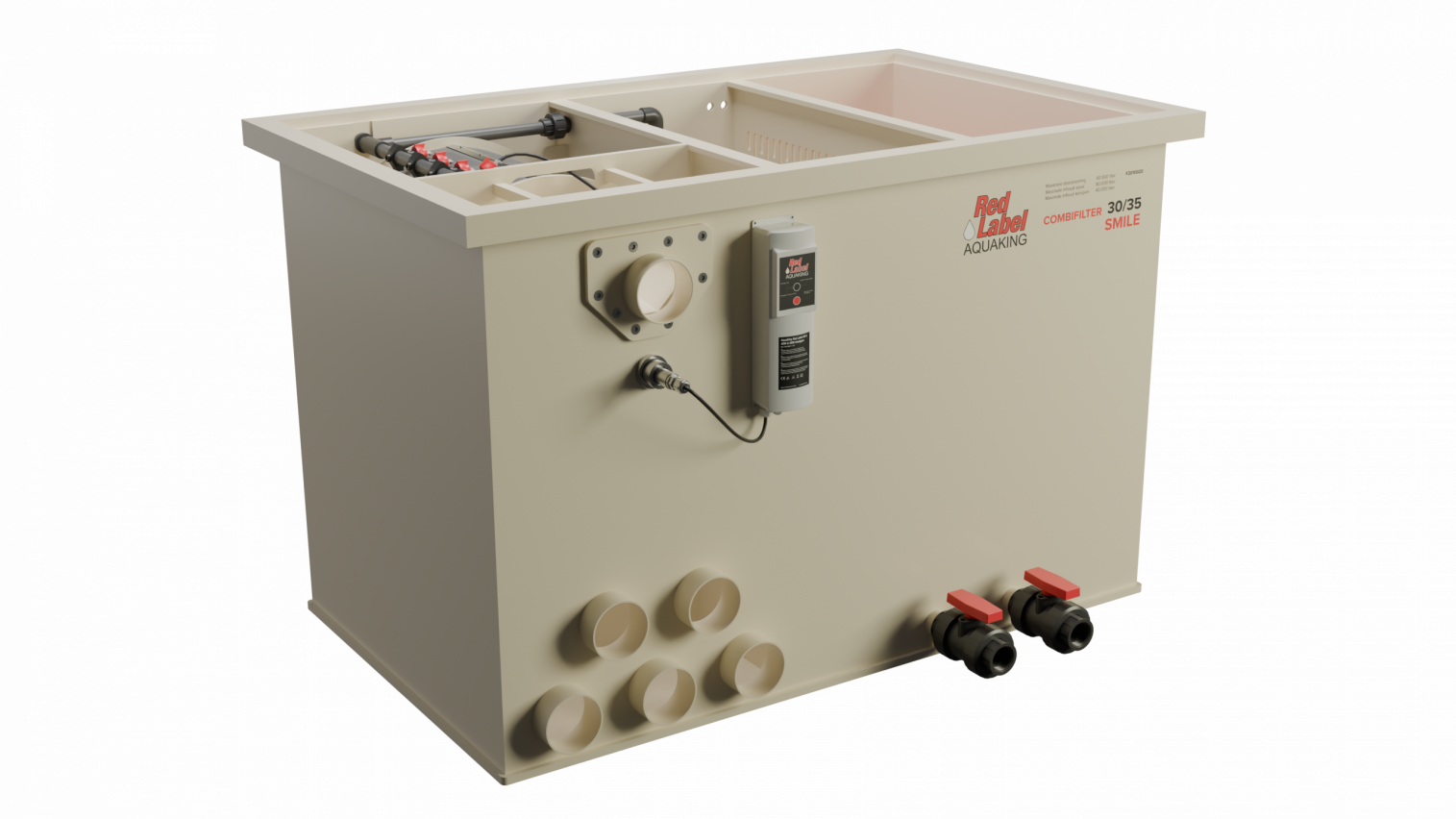
Choosing between a combi drum filter vs Nexus filter is one of the most important decisions when designing a high-performance koi pond filtration system. Both filtration technologies provide mechanical and biological treatment, but they operate using fundamentally different waste removal methods that directly impact water clarity, maintenance workload, and long-term system stability.
Understanding how a combi drum filter compares to a Nexus filter helps pond owners select the most suitable filtration solution based on stocking density, feeding levels, installation requirements, and long-term operational goals.
How Modern Koi Pond Filtration Systems Work
Most professional koi ponds in the UK use one of two primary filtration approaches:
• Automated drum filtration systems
• Traditional settlement and moving-bed systems such as Nexus filters
Both systems support biological nitrification processes. However, they differ significantly in how mechanical waste is removed before decomposition occurs.
Early mechanical waste removal is critical because uneaten food, fish waste, and organic debris rapidly break down into dissolved organic compounds. This increases ammonia loading, reduces oxygen availability, and can destabilise biological filtration performance.
What Is a Combi Drum Filter?
A combi drum filter is an automated filtration system that combines mechanical waste separation with dedicated biological treatment in a single integrated unit.
The system uses a rotating stainless-steel micro-mesh drum screen, typically between 50 and 120 microns, to physically remove suspended solids from pond water. As water passes through the drum, solid particles are captured on the screen surface.
When the screen becomes partially blocked, sensors automatically trigger a cleaning cycle. High-pressure spray bars then flush trapped waste into a waste trough, which discharges directly to drain. This ensures organic waste is removed from the system before decomposition can occur.
After mechanical filtration, water enters a moving-bed biological chamber containing floating media. Beneficial bacteria colonise the media and convert ammonia into nitrite and nitrate through nitrification.
What Is a Nexus Filter?
A Nexus filter is a combined mechanical and biological filtration system that uses settlement, static media, and moving-bed filtration to treat pond water.
Water first enters a central settlement chamber containing static K1 media. This stage captures solid waste through physical entrapment and sedimentation. Periodic cleaning involves aerating the media to release trapped waste, followed by flushing to drain.
After mechanical treatment, water moves into an outer moving-bed chamber where biological filtration occurs. Beneficial bacteria colonise the media and process dissolved nitrogen compounds.
Although Nexus filters provide reliable filtration performance, waste remains within the system until manual cleaning is performed.
Mechanical Filtration Efficiency
Mechanical filtration performance represents the most significant difference when comparing a combi drum filter vs Nexus filter.
A combi drum filter provides true mechanical separation using micro-mesh screening. Solid waste is removed immediately and discharged from the system before decomposition begins. This significantly reduces dissolved organic loading and improves water clarity.
By comparison, a Nexus filter relies on settlement and static media to capture waste. While effective at removing larger solids, fine suspended particles may remain in circulation until manual cleaning takes place.
As a result, drum filtration systems typically achieve higher water clarity and reduced organic accumulation.
Maintenance Requirements
Maintenance workload is another key factor when evaluating a combi drum filter vs Nexus filter.
Automated drum filtration systems require minimal routine intervention. Cleaning cycles operate automatically using electronic sensors. Routine maintenance typically involves periodic inspection of spray bars, pumps, and sensors.
Nexus filters require regular manual cleaning procedures. This involves agitating static media using air to release trapped waste and flushing the system to drain. Cleaning frequency increases significantly as feeding levels and stocking density rise.
Over time, automated filtration can substantially reduce labour requirements.
Water Clarity and Biological Stability
Because drum filters remove waste before decomposition, nutrient levels remain lower and biological filtration operates under more stable conditions.
Reduced organic loading improves dissolved oxygen levels, supports bacterial efficiency, and helps maintain consistent water parameters.
Nexus filters can maintain stable water quality; however, fine suspended solids and organic waste may remain between cleaning cycles, which can affect long-term clarity.
Installation Considerations
Installing an automated drum filtration system typically requires:
• Electrical supply connections
• Reliable water feed for spray cleaning
• Waste drainage infrastructure
• Adequate filter bay space
Correct water level setup is critical for gravity installations to ensure sensors operate accurately and prevent safety shutdown conditions.
Nexus filters generally require simpler plumbing connections and fewer electrical components, making installation less complex.
Cost and Long-Term Ownership
Automated drum filtration systems involve higher initial investment due to mechanical components, sensors, and automation technology.
However, reduced maintenance labour and improved filtration efficiency can provide long-term operational advantages.
Nexus filters have a lower upfront purchase cost but require ongoing manual maintenance and higher labour input over time.
Combi Drum Filter vs Nexus Filter – Technical Comparison Table
| Feature | Combi Drum Filter | Nexus Filter |
|---|---|---|
| Mechanical Filtration | Micro-mesh separation removes fine suspended solids before decomposition | Settlement and static media capture larger solids |
| Automation | Fully automatic cleaning cycles | Manual cleaning required |
| Water Clarity | Very high clarity due to early waste removal | Good clarity but less fine particle polishing |
| Maintenance | Low routine intervention | Regular manual cleaning needed |
| Biological Filtration | Dedicated moving-bed chamber | Integrated moving-bed chamber |
| Best Application | High stocking density and heavy feeding ponds | Moderate stocking density ponds |
| Installation Complexity | Requires power, drainage, and water supply | Simpler plumbing installation |
| Initial Investment | Higher upfront cost | Lower initial cost |
Which Filtration System Is Best for Koi Ponds?
A combi drum filter is generally the preferred solution when:
• Maximum water clarity is required
• Stocking density is high
• Feeding rates are heavy
• Maintenance time must be minimised
A Nexus filter may be suitable when:
• Budget is limited
• Installation simplicity is a priority
• Stocking density is moderate
• Regular manual maintenance is acceptable
Expert Filtration Advice
Correct filter sizing, installation accuracy, and water level calibration are critical to achieving optimal performance from any filtration system.
Professional pond design should always consider:
• Total water volume
• Flow rates and turnover targets
• Biological load expectations
• Future stocking plans
Summary
Both combi drum filters and Nexus filters can provide effective koi pond filtration when correctly sized and maintained. The optimal choice depends on long-term filtration goals, maintenance preferences, and stocking density requirements.
Automated drum filtration systems offer superior mechanical waste removal, improved clarity, and reduced maintenance, making them increasingly popular for modern high-performance koi ponds.
Legal Notice
This article provides general technical information based on established filtration principles and publicly available manufacturer data. Filtration performance varies depending on pond design, installation quality, stocking density, and maintenance practices.