
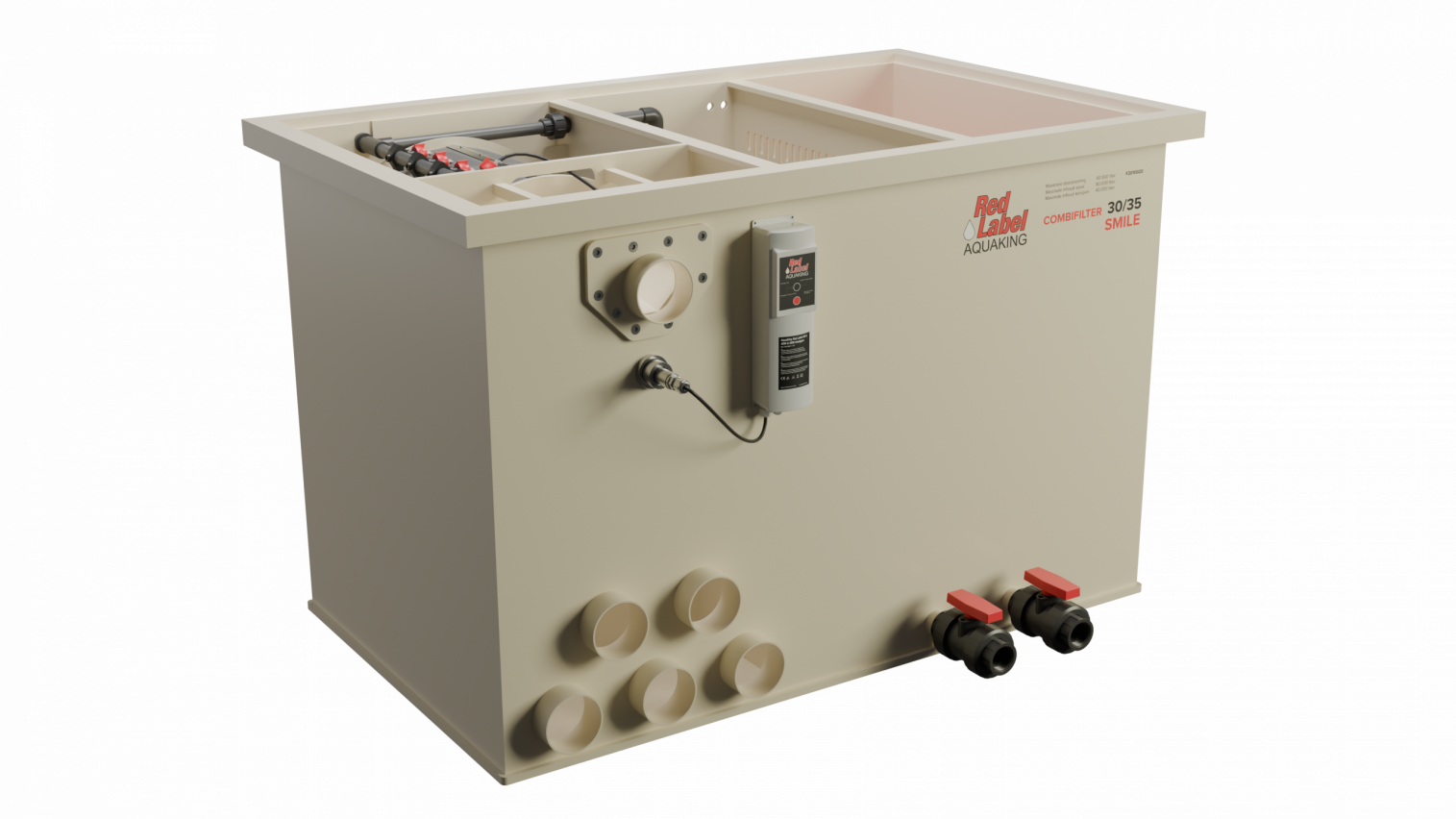
What is a Koi Pond Filtration System?
A koi pond filtration system removes waste and harmful compounds from pond water in order to maintain stable conditions for koi. Most systems include mechanical filtration to remove solid debris and biological filtration to process ammonia and nitrite. Aeration and water circulation support these processes and help maintain clear, healthy pond water.
Koi produce significantly more waste than many ornamental pond fish. Without effective filtration, fish waste and uneaten food accumulate quickly. As a result, organic material begins to break down and release ammonia, which can damage water quality.
For this reason, modern koi ponds rely on several filtration processes working together to maintain stable conditions.
How a Koi Pond Filter System Works
A koi pond filter system removes waste from pond water and processes harmful compounds produced by fish. In most ponds this happens through several filtration stages working together.
A typical koi filtration setup includes:
• mechanical filtration
• biological filtration
• aeration
• water circulation
First, mechanical filtration removes solid debris before it decomposes. Next, biological filtration processes dissolved waste through beneficial bacteria.
Meanwhile, aeration supplies oxygen required by both fish and bacteria. At the same time, circulation ensures pond water continually moves through the filtration equipment.
Together these processes help maintain stable water quality.
Mechanical Filtration in a Koi Pond Filtration Setup
Mechanical filtration removes solid waste before it breaks down inside the pond system. In practice, this stage captures most visible debris entering the filtration equipment.
Common debris removed includes:
• fish waste
• uneaten food
• leaves and organic debris
• suspended particles
Many koi ponds use automatic drum filters as the primary mechanical stage. These filters capture fine debris before it can decompose and release ammonia.
An example of this type of equipment is the Red Label drum filter range, which provides automatic mechanical filtration designed for koi ponds.
Learn more here:
Red Label drum filters
Biological Filtration in a Koi Filtration System
Biological filtration processes dissolved waste produced by fish. More importantly, it prevents toxic compounds from building up in the pond.
Fish release ammonia through respiration and waste. Because ammonia is highly toxic, it must be converted quickly to prevent health problems.
Beneficial bacteria convert ammonia through the nitrogen cycle.
The process occurs in three stages:
Ammonia → Nitrite → Nitrate
While ammonia and nitrite are dangerous to fish, nitrate is far less harmful. Therefore nitrate can normally be controlled through water changes.
Biological filters contain specialised media designed to support large colonies of beneficial bacteria.
Aeration in Koi Pond Filtration
Aeration plays a vital role in maintaining a healthy koi pond filtration system. In particular, oxygen supports several important biological processes.
Oxygen supports:
• koi respiration
• bacterial activity
• biological filtration efficiency
Air pumps, air stones and aerated bottom drains are commonly used to increase oxygen levels in koi ponds.
In addition, higher oxygen levels improve the performance of biological filtration and help maintain stable pond conditions.
Learn more here:
Koi pond aeration systems
Water Circulation and Flow Rate
Water circulation ensures the entire pond volume passes through filtration equipment regularly. Without adequate circulation, waste can accumulate in areas of poor water movement.
Most koi ponds are designed so that the pond volume circulates approximately once every one to two hours.
However, the required flow rate depends on several factors including:
• pond size
• stocking density
• feeding levels
Proper circulation also helps transport waste towards bottom drains and skimmers where it can enter the filtration system.
Learn more here:
Pond pumps for koi ponds
Surface Skimmers in a Koi Pond Filtration System
Surface skimmers are commonly used in koi pond filtration systems to remove floating debris from the pond surface. Leaves, pollen and uneaten food can accumulate on the surface if they are not removed.
A skimmer draws water from the top layer of the pond and directs it into the filtration system. This helps prevent debris from sinking to the bottom where it can decompose.
In addition to removing debris, skimmers improve circulation by pulling surface water towards the filtration system. This also helps maintain better oxygen exchange at the water surface.
Many koi ponds use both bottom drains and surface skimmers so that waste can be removed from different areas of the pond.
Example Koi Pond Filtration Layout
A typical koi pond filtration layout moves water from the pond through several filtration stages before returning clean water back to the pond.
A common layout is:
Pond → Bottom Drain → Mechanical Filtration → Biological Filtration → Pump → Return to Pond
First, water leaves the pond through bottom drains or skimmers. Solid waste is removed during mechanical filtration.
Next, water enters the biological filter where beneficial bacteria convert ammonia and nitrite into nitrate.
Finally, the pump returns filtered water back to the pond, completing the circulation cycle.
Recommended Water Parameters for Koi Ponds
Maintaining stable water parameters is essential for koi health.
Typical recommended values include:
• Ammonia: 0 mg/L
• Nitrite: 0 mg/L
• Nitrate: below 40 mg/L
• pH: 7.0 – 8.5
• Dissolved oxygen: above 6 mg/L
Regular testing helps detect problems before they affect fish health.
Learn more here:
Koi pond water testing
Common Koi Pond Filtration Mistakes
Even well-designed ponds can experience filtration problems if the system is not properly planned.
Common mistakes include:
• undersized filtration systems
• insufficient water circulation
• poor bottom drain placement
• inadequate aeration
• overstocking fish
Avoiding these issues helps maintain stable water conditions and improves the performance of a koi filtration system.
Maintaining a Koi Pond Filtration System
Regular maintenance ensures filtration equipment continues operating efficiently.
Typical maintenance tasks include:
• inspecting mechanical filters
• checking pumps and pipework
• monitoring water parameters
• replacing UV bulbs annually
Routine water testing helps prevent water quality problems before they affect fish health.
Conclusion
A properly designed koi pond filtration system maintains clear water and stable conditions for koi.
Mechanical filtration removes solid waste, biological filtration processes dissolved pollutants and aeration supports both fish and beneficial bacteria.
When these elements work together, a koi pond environment remains stable and healthy for long-term koi keeping.